Reduce lead times and integrate your supply chain by sourcing premium botanicals from Egypt’s Mediterranean hubs.
Estimated reading time: 3 minutes
TLDR: Egypt has emerged as the most critical agrifood partner for the European Union, absorbing 30% of Egyptian exports. By implementing a nearshoring Egyptian herb export strategy, EU buyers benefit from reduced transit times and maritime logistics that outperform competitors.
Short Description: This article analyzes the logistical shift toward Egyptian botanicals, exploring how Diamond Herbs utilizes end-to-end maritime coordination and port handling to optimize the landed cost and reliability for European importers.
Table of contents
Why the Shift Toward Nearshoring Egyptian Export is the Smart Choice?
The European Commission has frequently highlighted Egypt as a “success story” in the agrifood sector. As global supply chains face increasing volatility, European industries are actively prioritizing Egyptian herb export models to move production and sourcing closer to home. Egypt’s geographic proximity allows EU companies to integrate Egyptian botanicals more deeply into their own high-speed production lines, ensuring that supply chains remain resilient against global disruptions.
Integrated Farm-to-Port Logistics for EU Importers
Diamond Herbs manages a vertically integrated supply chain that unites smallholder coordination with certified factory processing.
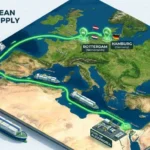
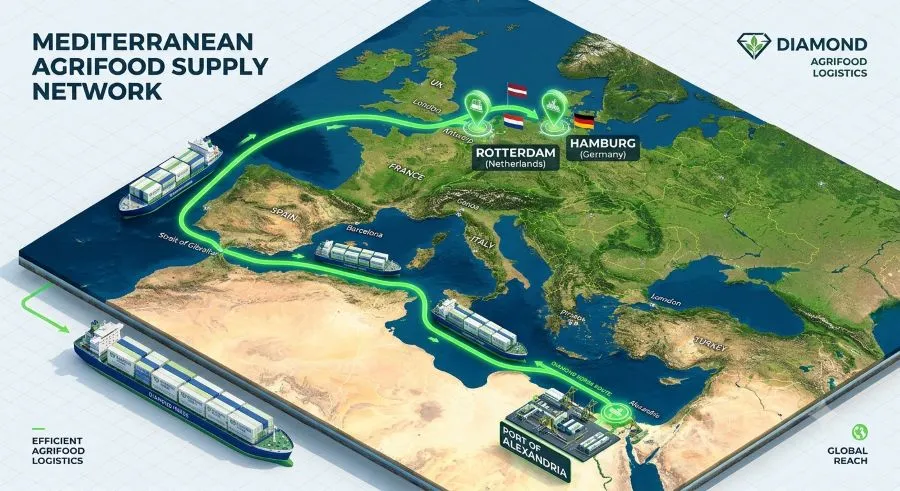
This “Farm-to-Factory-to-Port” model ensures that every Egyptian herb shipment is not just high quality, but physically ready for maritime departure with all necessary documentation. According to EU officials like Amb. Christian Berger, the EU is now Egypt’s most important export market. This deep partnership facilitates a smoother flow of goods through Mediterranean hubs like Alexandria directly to Rotterdam or Hamburg.
Optimizing Landed Cost with Incoterms
For high-volume buyers, the logistics of a nearshoring Egyptian herb export are as vital as the product itself. We coordinate the entire process—including local transport, port handling, and maritime shipping—under Incoterms.
This provide importers with end-to-end visibility and a predictable landed cost, which is essential for retail and industrial budgeting. By sourcing from Egypt rather than distant Asian hubs, importers can significantly reduce their working capital tied up in “on-water” inventory.
Reliability Through Compliance and Documentation
A major logistical bottleneck in international trade is often paperwork. Diamond Herbs preemptively compiles destination-specific export files, including Phytosanitary Certificates, Certificates of Origin, and COA-backed safety records specifically aligned with EU requirements. This documentation accuracy, which we maintain at a 98% rate, ensures a smooth customs clearance process at European ports, preventing costly demurrage and delays.
Conclusion: Securing Your Supply Chain
Transitioning to a nearshoring Egyptian herb export model is more than a cost-saving measure; it is a strategic move toward supply chain integration. With Egypt offering “great logistical advantages for European industries,” now is the time to audit your sourcing routes.